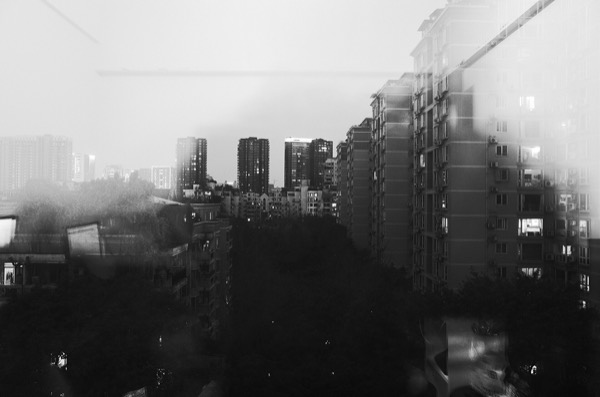
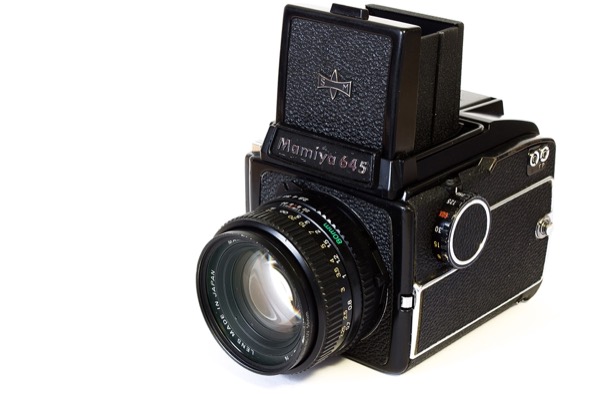
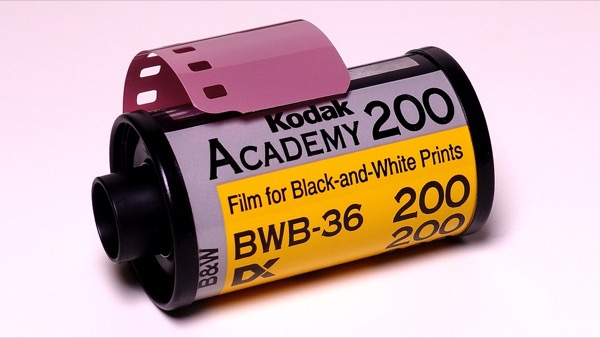
HP5 at 1600, one winter roll
Short days, grey light and a roll of HP5 rated at 1600. What happened in the tank, what I would change, and why I keep coming back to push processing every winter.
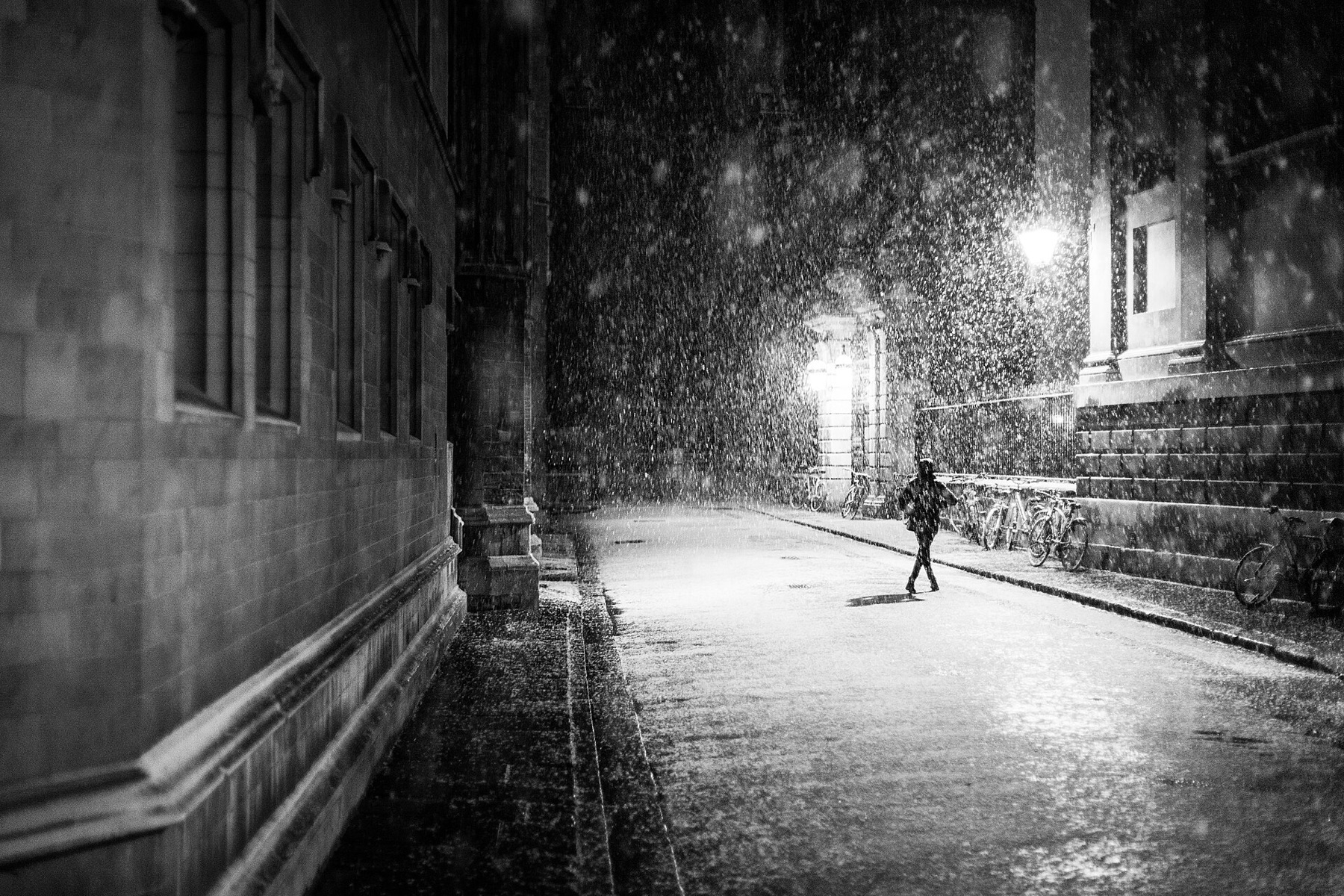
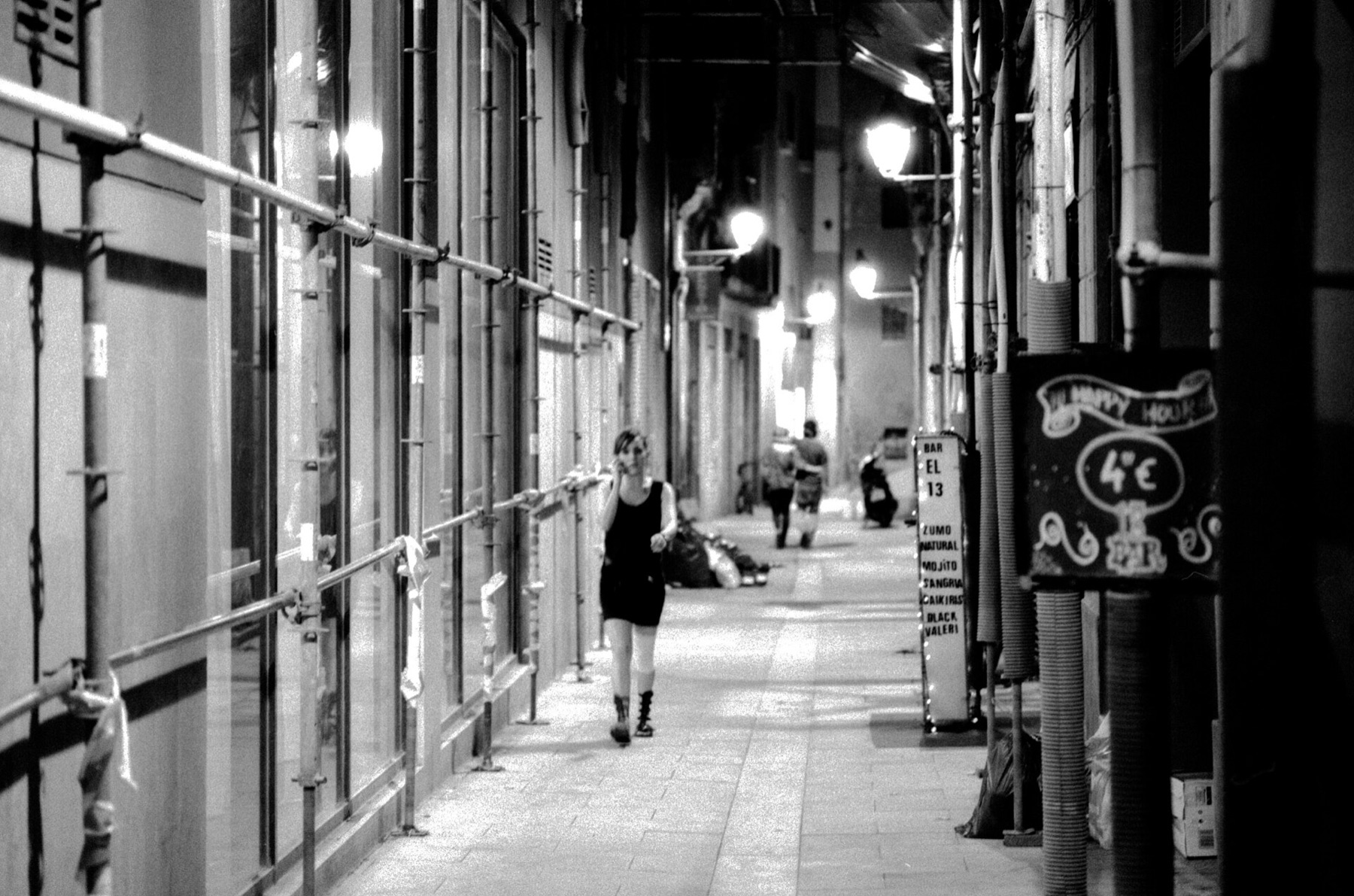
Every November the light goes flat by three in the afternoon, and every November I load a roll of HP5 and set the meter to 1600. Two stops of push is a compromise: the shadows thin out, the highlights get punchy, and grain becomes part of the picture rather than a defect.
This year's roll was shot over two weeks of walking home from work. Wet streets, shop windows, the bridge with its lamps coming on, the bus station at half past four.
What pushing actually does
It is worth being clear about this, because I believed something else for a long time. Rating a film at 1600 does not make it more sensitive. It means I underexpose by two stops and then develop longer to make up for it. The longer development builds density in the midtones and highlights, but the shadows, which received very little light, gain almost nothing. A push is a contrast increase, not a sensitivity increase.
What I did in the tank
| Step | Time | Notes |
|---|---|---|
| Pre-wash | 1 min | Plain water, 20 °C |
| Rodinal 1+50 | 22 min | 30 s initial, then 10 s every minute |
| Stop | 1 min | Water, three changes |
| Fix | 5 min | Rapid fixer, fresh, clip test 40 s |
| Wash | 10 min | Running water, then a drop of wetting agent |
Rodinal is not the obvious choice for pushing. A solvent developer would keep the grain finer and probably give a touch more shadow detail. But I like the sharpness, and in winter street pictures, the grain looks right.
What I would change
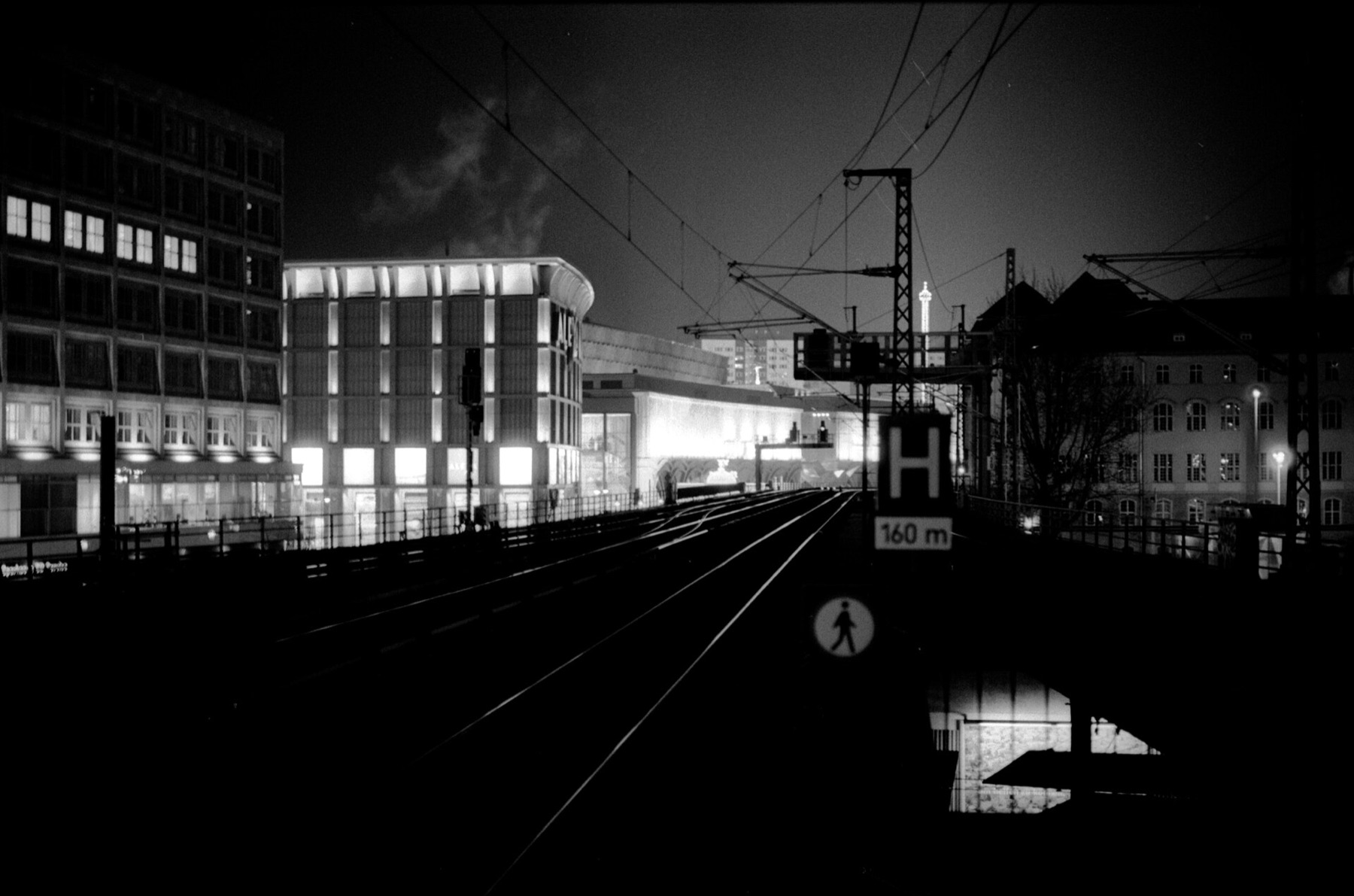
The shadows under the bridge went completely clear, and the left half of three frames is simply empty film. Next time I will meter for the shadows and accept that the sky blows out. Push processing cannot create detail that was never exposed.
The shop windows, on the other hand, came out beautifully: bright, a little harsh, with the reflections in the wet pavement holding together. Pushed film loves scenes where the light is the subject.
Why I keep doing it
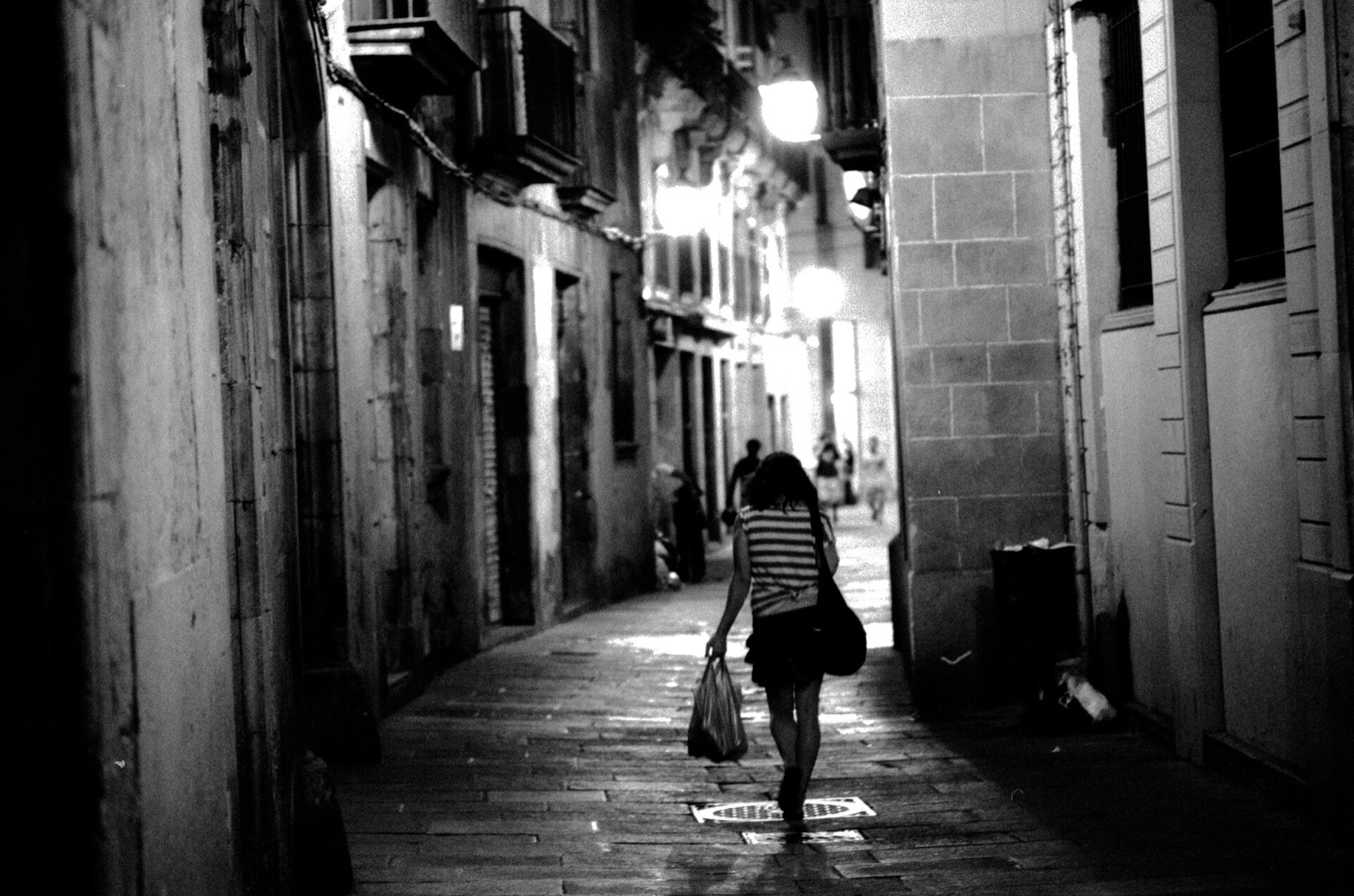
Because the alternative is not taking the pictures at all. At ISO 400, at f/2, the bus station at dusk needed 1/15 of a second, and my hands are not that steady after a long day. At 1600 it was 1/60. The grain and the empty shadows are the price, and on this roll I think it was worth paying.
More pictures of streets after dark are collected in the night streets series.
— Elin, 8 November 2026