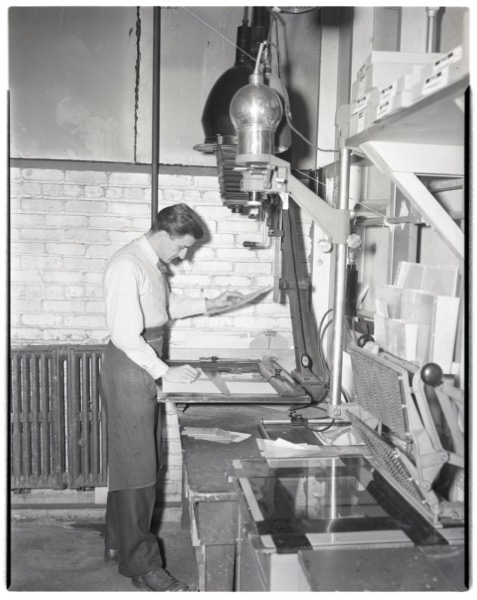
Contact sheets, and why I still make them
A sheet of paper, a sheet of glass and a few seconds of light. Contact sheets are the slowest way to look at a roll, and the one that teaches me the most.
Scanning a roll takes me about twenty minutes. Making a contact sheet takes about the same. I still make one for every roll I care about, because the two show me different things.
A scan shows each frame alone, enlarged, on a bright screen. A contact sheet shows the whole roll at the size of the negatives, in order, on paper. That order is the point. I can see where I hesitated, took three frames of the same corner and gave up, and where I found something and kept going.

How I make them
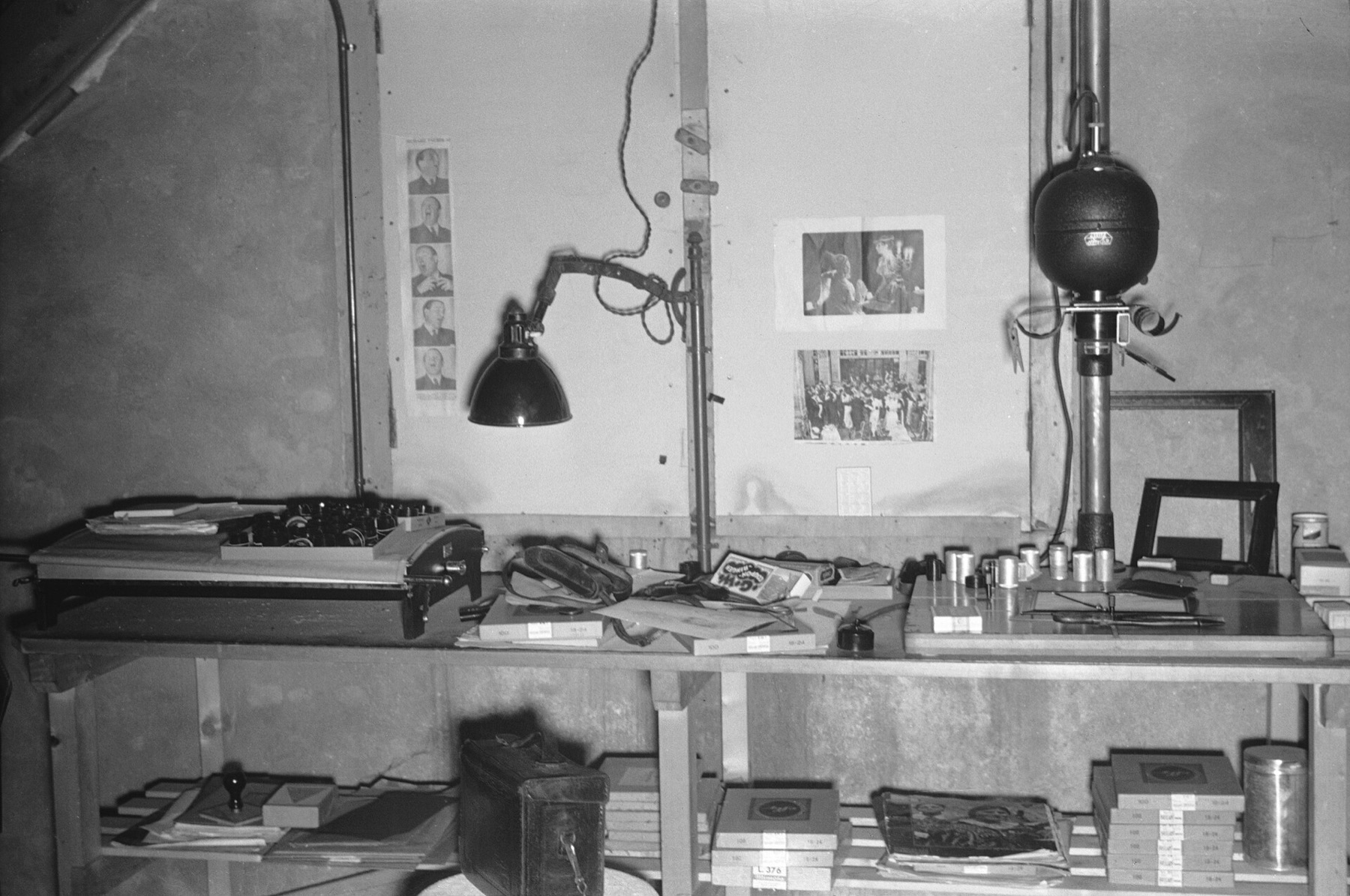
I do not need an enlarger lens for this, only its light. The negatives go emulsion side down onto a sheet of 8×10 paper, under a sheet of heavy glass from an old picture frame. The enlarger is raised so the light covers the whole sheet, the lens is stopped down to f/8, and a test strip tells me the time. For my negatives that is usually around eight seconds with a grade 2 filter.
The aim is not a perfect print. The aim is a sheet where the film edges just reach full black. If the edge numbers are black and a frame still looks grey, that frame is thin. If a frame looks dark even though the edges are just black, it is dense. A contact sheet made this way is also a quick exposure check for the whole roll.

Marking them up
I mark contact sheets with a china marker. A circle means worth printing, a cross means no. A small arrow means the frame might work cropped. I write the date, the film and the developer on the back in pencil, and the sheet goes into the binder next to the negatives.

What they taught me
Looking back through a year of sheets, I noticed that my best frames almost never came first. They were the fourth or fifth frame of a scene, after I had walked closer, changed angle, waited for someone to leave the frame. The first frame was a note to myself that something was there. That changed how I shoot: I no longer take one picture and walk on.
— Elin, 8 December 2024